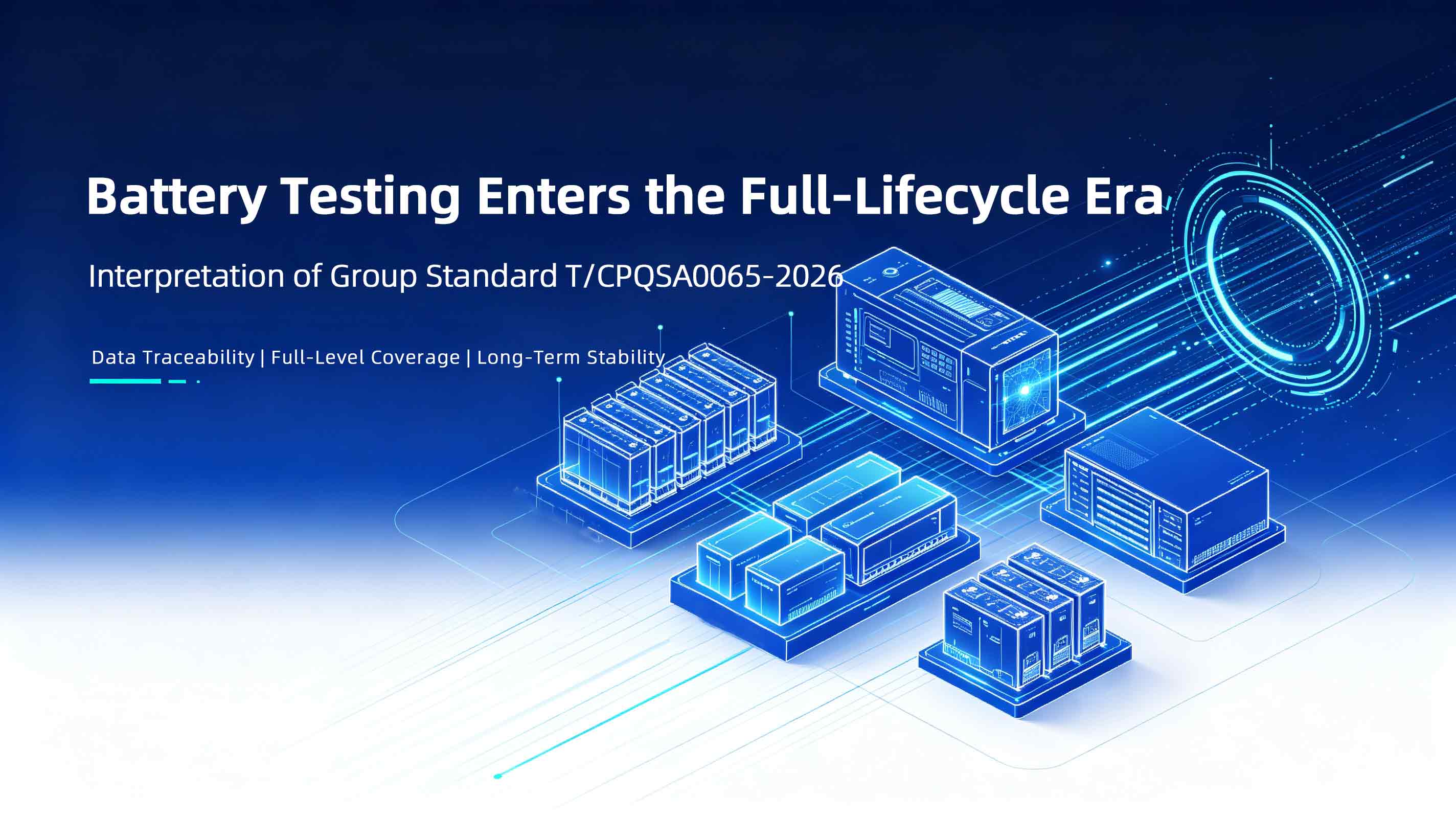

Carbon Peaking Action Plan for the 15th Five-Year Plan Issued, Energy-saving Intelligent Lithium-ion Battery Manufacturing & New Energy Testing Equipment Usher in a New Growth Cycle
The 15th Five-Year Plan period (2026–2030) is a critical sprint phase for China to achieve its 2030 carbon peaking target, with the industrial sector serving as the core battlefield for carbon reduction. The State Council has issued the Carbon Peaking Action Plan for the 15th Five-Year Plan, which sets clear core targets: by 2030, the installed capacity of new energy storage will strive to reach 300 GW; over the five-year period, the carbon dioxide emissions per unit of added value of industrial enterprises above designated size will drop by more than 17%, and the energy consumption per unit of added value will decrease by more than 10%. The plan mandates the orderly elimination of backward and inefficient production capacities and equipment, the implementation of energy-saving and carbon-reduction transformations in traditional industries, the improvement of the statistical accounting system for carbon emissions, and the continuous improvement of product carbon footprint accounting standards, driving key industries toward energy efficiency upgrades and low-carbon intelligent transformation.
For the power battery and energy storage manufacturing industry, this policy creates a dual driving force: on one hand, the large-scale expansion of new energy storage directly drives the demand for efficient production lines and testing equipment; on the other hand, the pressure of industrial carbon reduction and carbon accounting compliance forces factories to shift from a "capacity-only" model to a balanced development model that prioritizes energy efficiency, production capacity, and regulatory compliance. The industry is moving beyond fragmented energy-saving renovations and entering a new era of full-process low-carbon intelligent manufacturing. High-efficiency, digitally traceable lithium battery intelligent manufacturing equipment has become the core lever for enterprises to reduce carbon emissions, unlocking a new structural growth cycle for the sector.
I. Cell Production Cost & Carbon Reduction: Automated Formation & Grading Production Lines
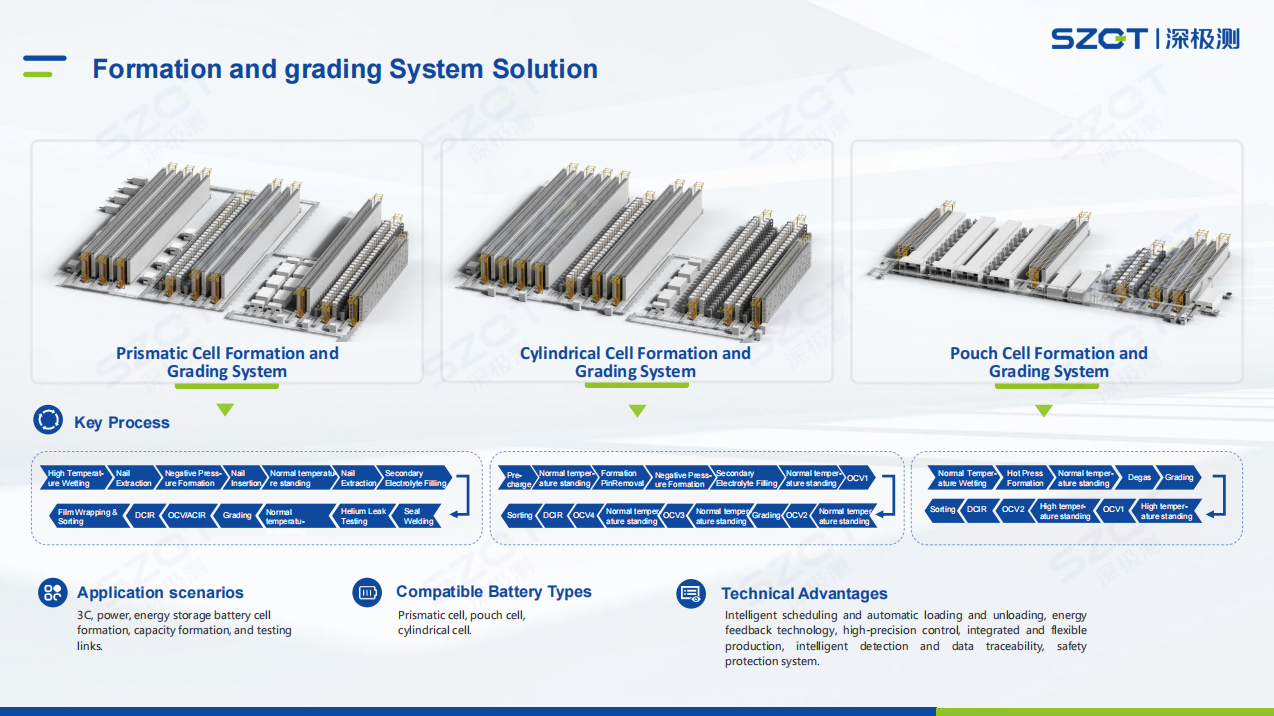
Cell formation and capacity grading are the core energy-consuming links in lithium battery manufacturing, making them the top priority for low-carbon transformation under the 15th Five-Year Plan. Shenzhen Geektest Technology Co., Ltd. (SZGT) provides mature energy-saving production lines compatible with prismatic, pouch, and cylindrical cells, achieving process-level carbon reduction from three dimensions: manufacturing technology, temperature control, and energy efficiency.
✅ Pulse Charge-Discharge Technology: Optimizes SEI film formation quality, shortening the overall production cycle by 30% and reducing power consumption caused by prolonged equipment operation.
✅ Integrated Hydrothermal Temperature Control: Maintains a temperature difference of ±2℃ across all stations, eliminating additional power loss from temperature regulation.
✅ High-Energy Feedback Recycling Architecture: The comprehensive energy efficiency of formation modules reaches 96%, and the internal energy recycling rate of the busbar for grading reaches 83%, cutting carbon emissions generated in cell manufacturing at the source.
II. Mandatory Carbon Accounting: Multi-Tier High-Efficiency Battery Testing Equipment
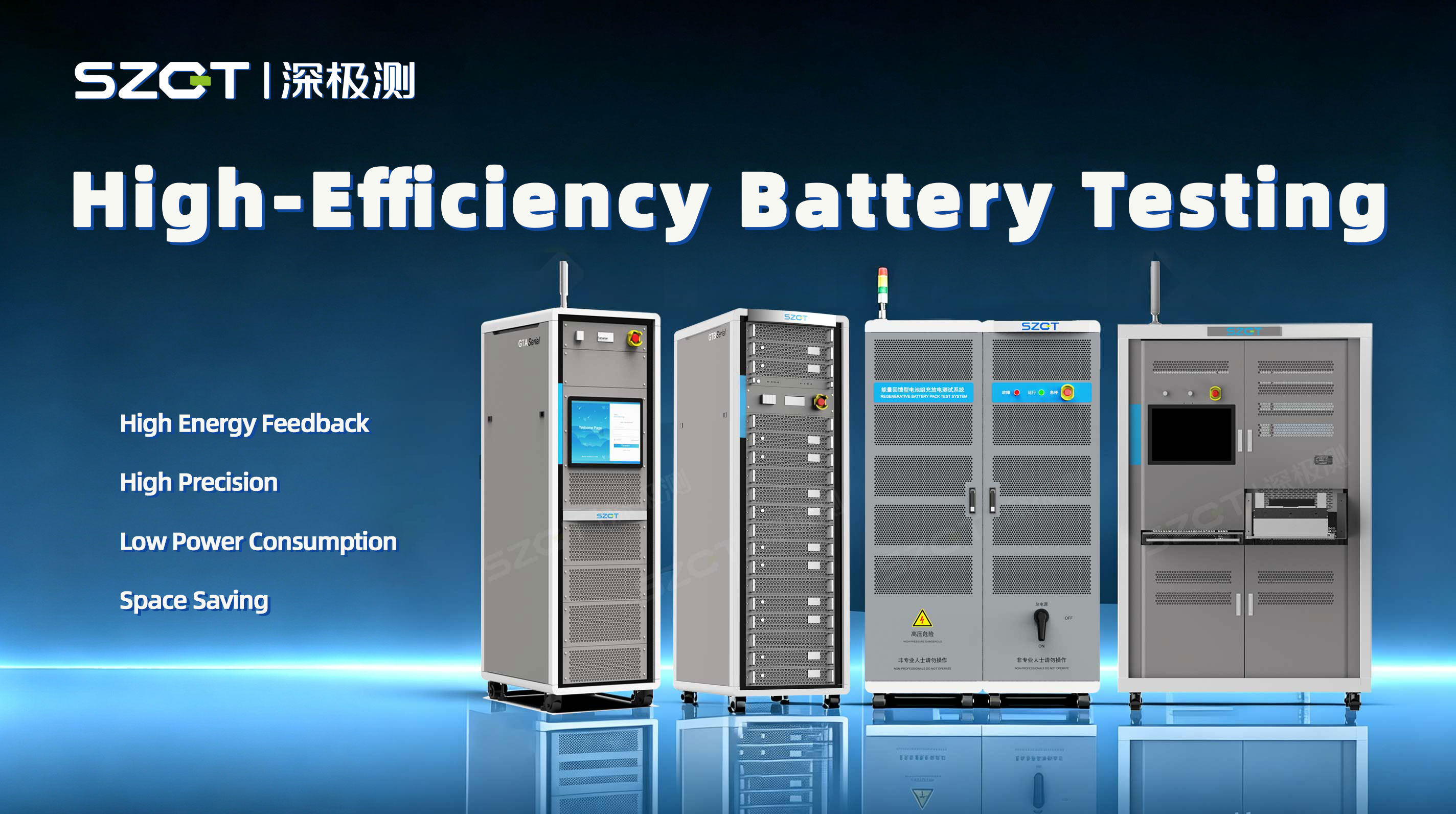
Against the backdrop of regular carbon assessment and auditing, high-feedback, high-precision testing equipment has become a mandatory standard for factory procurement. SZGT has developed a complete high-efficiency testing system to meet the demands of carbon accounting compliance:
1. Cell Testing Equipment
- ✅ Current accuracy: ±0.02% FS, 200Hz high-frequency sampling
✅ Maximum energy feedback efficiency: >91%
✅ Integrated power supply & temperature chamber: Cable usage reduced by over 50%, floor space cut by over 30%
Value: Precise energy consumption measurement supports carbon footprint ledgers, while energy feedback directly reduces carbon emissions.
2. Module/PACK High-Voltage Testing Equipment (SiC Three-Level Topology)
- ✅ Voltage range: 0~2000V
- ✅ Voltage accuracy: ±0.01% FS | Current accuracy: ±0.03% FS
✅ Volume reduced by 35%, weight reduced by 45%
✅ Maximum energy feedback efficiency: >99%
Value: The ultra-high feedback rate drastically cuts power consumption during testing; the compact design lowers factory energy consumption and civil engineering investment.
Core Equipment Advantages: Full-process high-precision energy consumption measurement + ultra-high energy feedback, simultaneously meeting the dual compliance requirements of factory carbon accounting certification and EU Battery Regulation.
III. Low-Carbon Large-Scale Energy Storage Deployment: Module Assembly & Energy Storage Integrated Production Lines
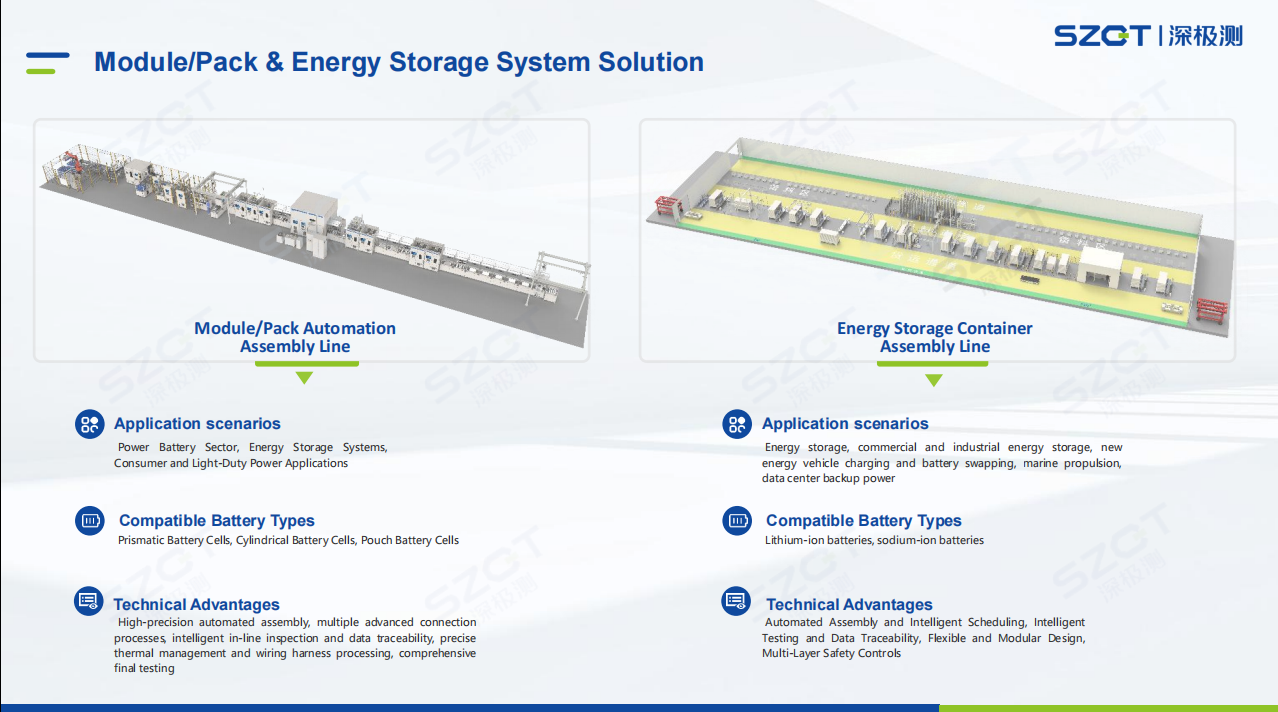
Aligning with the 15th Five-Year Plan's target of expanding new energy storage installed capacity, SZGT has developed two types of automated production lines for module assembly and energy storage integration. High-precision, fully digital manufacturing workflows reduce energy consumption throughout the production process, supporting the large-scale low-carbon development of the energy storage industry.
1. Automated Module/PACK Assembly Line: Stacking accuracy reaches ±0.2mm, integrated with laser welding and full CCD visual inspection. Production and energy consumption data from all processes can be directly connected to factory MES systems, enabling closed-loop collection of full-process carbon data.
2. Energy Storage Container Assembly Line: Covers the full workflow of empty container feeding, liquid-cooled PACK assembly, safety compliance testing, and full-container performance verification. Equipped with 60-ton heavy-duty AGVs delivering ±5mm high-precision positioning, automated workflows reduce auxiliary material consumption and process power usage.
IV. Global After-Sales Support Network
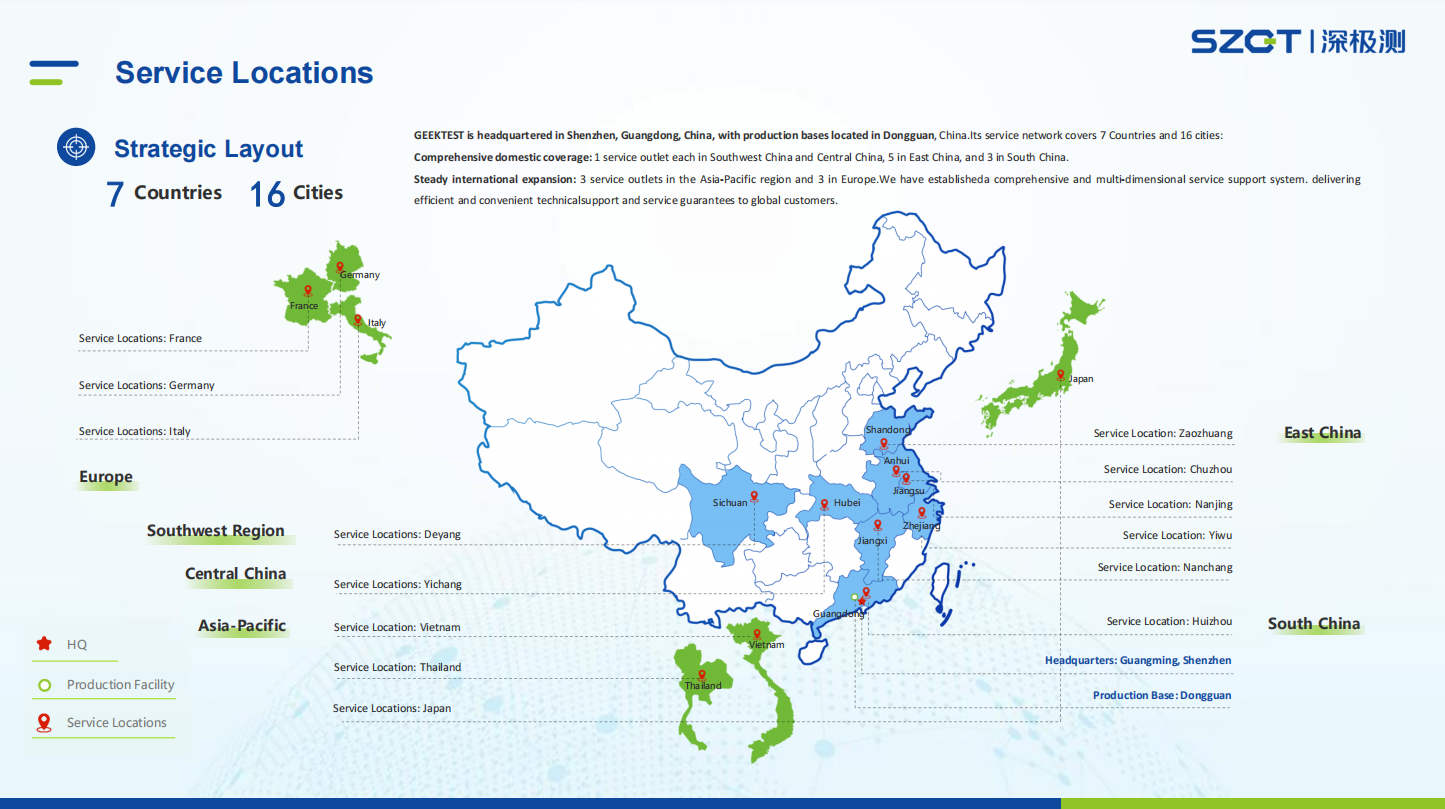
SZGT's service network spans 16 cities across 7 countries worldwide, supported by a standardized after-sales system: 1-hour technical response, 24-hour on-site service, 48-hour customized long-term preventive maintenance solutions, and lifelong free technical consultation for products, continuously guaranteeing stable low-carbon operation of production lines.