
Effective September 1: Lithium Batteries Subject to Additional 2% Consumption Tax — How Can Manufacturers Navigate the Headwinds?
Effective September 1, Announcement No. 20 of 2026 jointly issued by the Ministry of Finance and two other national authorities will officially take effect: lithium-ion batteries will be levied an additional 2% consumption tax, and the rate is expected to rise to 4% in 2027. Meanwhile, sodium-ion batteries, solid-state batteries and fuel cells will remain exempt from consumption tax until the end of 2028.
The consumption tax is levied at the production stage, making battery manufacturers and PACK assembly enterprises the direct taxpayers. Given the highly competitive market and transparent pricing in the current lithium battery industry, the additional tax burden can hardly be fully passed downstream to end products in the short term. Coupled with the recent export restrictions on copper and cobalt concentrates from the Democratic Republic of the Congo, tightening upstream raw material supply and intensifying price volatility, the growth model that relies solely on capacity expansion can no longer offset the dual cost pressures from taxation and raw materials.
Three Pressures Driving Comprehensive Upgrade of Production Equipment
Loss control directly determines profit margins.Traditional low-precision testing equipment suffers from large measurement errors and high defective outflow rates. Outdated production lines lack energy recovery designs, resulting in high workshop power consumption, which further amplifies cost losses.
Demand for flexible production lines is surging.Enterprises are simultaneously deploying both lithium-ion and sodium-ion battery technology routes. Old rigid production lines come with high retooling costs and long commissioning cycles, making it difficult to support mass production of diverse cell types.
Digital traceability requirements are tightening.With the acceleration of zero-carbon factory construction and approaching regulations such as the EU Battery Passport, enterprises need complete production, energy consumption and testing data for carbon footprint accounting. Traditional standalone equipment can hardly meet such compliance requirements.
The Key to Breaking Through: Tapping Production Line Profits Internally
Faced with policy divergence and cost pressures, leading enterprises have begun to adjust their equipment selection logic. Three directions are noteworthy:
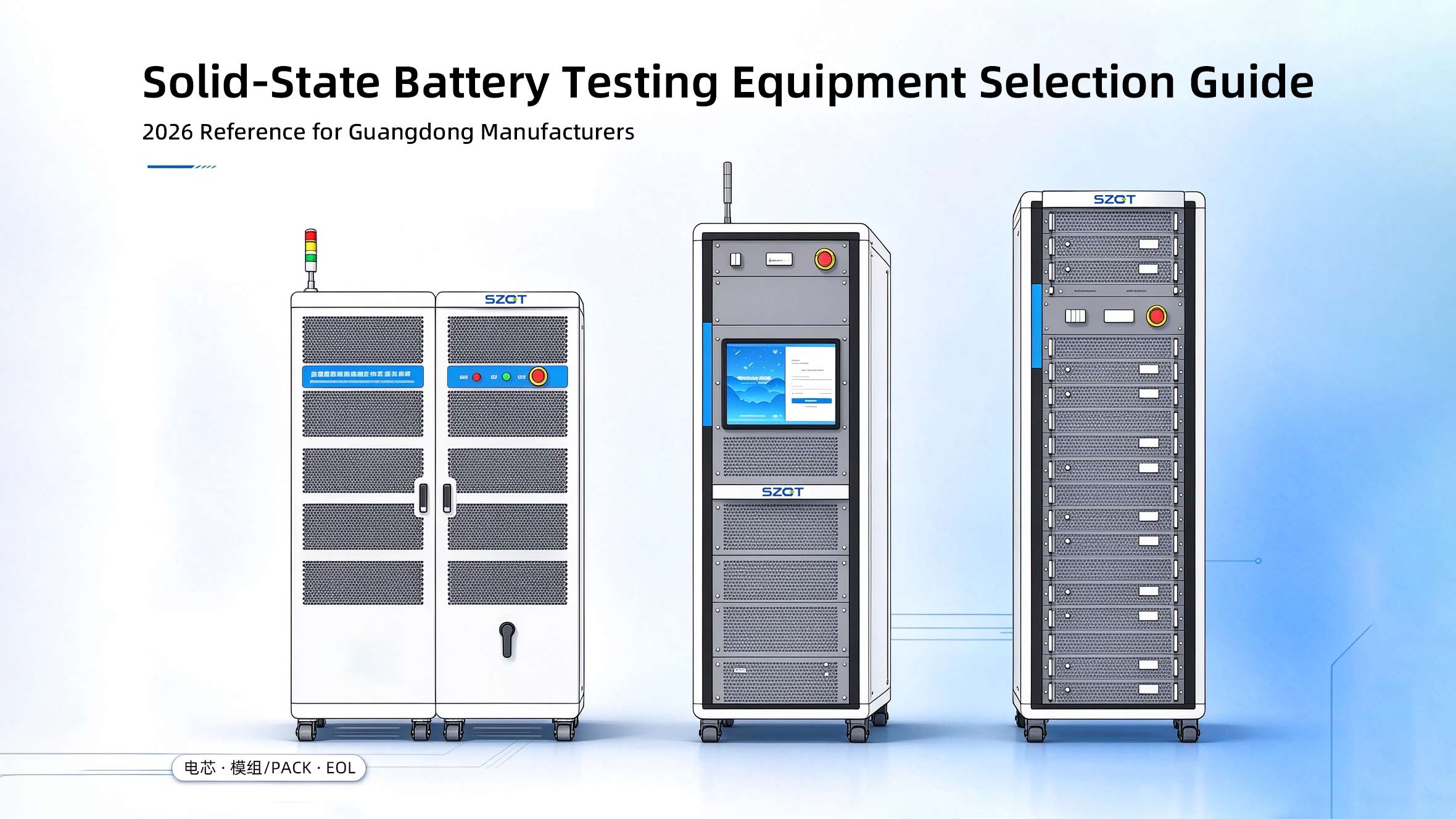
High energy feedback to reduce workshop power costsNew-generation testing equipment effectively reduces operating energy consumption through internal circulation and recovery of electrical energy. GEEKTEST’s cell test systems achieve an energy feedback efficiency of over 91%, and its module/pack test systems reach up to 99%. Combined with 200Hz high-frequency sampling and high-precision detection, it reduces defective output at the source and cuts waste of lithium and cobalt raw materials.
Flexible compatibility for dual-technology production layoutsModular automated production lines support prismatic, cylindrical and pouch cells without major retrofitting, and even enable co-linear production of lithium-ion and sodium-ion batteries, reducing sunk costs when switching between technology routes.
End-to-end digitalization for zero-carbon complianceGEEKTEST equipment natively supports integration with MES/LIMIS systems. With a "one item, one code" mechanism that fully records energy consumption and quality data throughout the process, it preserves foundational data for carbon accounting, helping enterprises meet compliance requirements such as zero-carbon factory accreditation and the EU Battery Passport.
GEEKTEST : Proven by Leading Industry Clients
As a National High-Tech Enterprise and Specialized and Sophisticated SME deeply engaged in new energy testing and automated turnkey lines, GEEKTEST (SZGT) is headquartered in Guangming District, Shenzhen, with a production base in Dalang, Dongguan. The company employs over 500 people, over 40% of whom are engaged in R&D, and has cumulatively filed more than 100 national patents. It holds a full set of system certifications including ISO 9001, ISO 14001, ISO 45001, ISO 50001 and ISO 27001.
The company’s portfolio covers battery testing, formation and grading, automated module/pack assembly, turnkey energy storage container lines, automotive electronics production lines, and new energy after-sales service equipment. It has served leading clients including BYD, Li Auto, GAC Motor, Sungrow and Sunwoda, with various testing equipment and automated production lines deployed in new energy industrial parks nationwide.
Conclusion
In the short term, the 2% consumption tax will accelerate the phase-out of low-end and outdated production capacity. In the medium to long term, tax exemption policies for sodium-ion and solid-state batteries will continue to drive the expansion of new battery production capacity. Coupled with the rollout of domestic and overseas energy storage projects, demand for flexible automated production lines and dedicated testing equipment is on a steady rise.
As "energy efficiency + high precision + digitalization" gradually becomes an industry consensus, differences in equipment selection may become a key variable determining whether enterprises can defend their profit margins. GEEKTEST (SZGT) will continue to deepen its focus on new energy testing equipment and automated turnkey lines, and work with industry partners to navigate policy changes.